 RU
 KG
 EN







ELECTRONIC LIBRARY
A BRIEF HISTORY OF THE LIBRARY
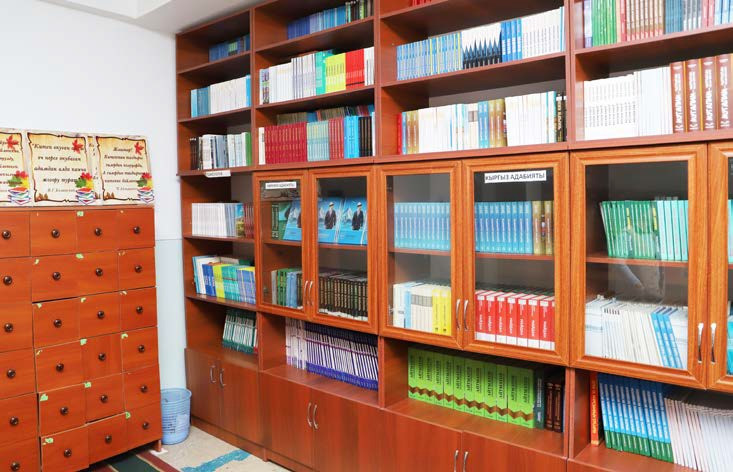
The history of the library department of the Kyrgyz State Pedagogical Institute, one of the first educational institutions in Kyrgyzstan, is directly linked to the history of the first educational institution in the south, which opened in 1925. Initially, the institution offered pedagogical courses, collecting educational and methodological literature necessary for training pedagogical specialists. Later, a library was opened, with books in Russian, Kyrgyz, and Uzbek. In the 1970s, only one library was opened, and the first librarian was Zulfiya Baichoroeva. The book collection comprised more than 15,000 items. In the late 1970s, due to the growth of the book collection, two libraries and one reading room were opened, staffed by three librarians and one librarian. The library was headed by Salima Toktomambetova. The total book collection in 2004-2005 amounted to more than 75,000 books. Currently, the OShMPU Library Department is headed by Karamat Karalaeva. The school's facilities are constantly being strengthened. Currently, the university has three libraries, three reading rooms, and one electronic library. The total book collection is 110,331 items. The library employs eight staff members.
RESPONSIBILITIES OF LIBRARIES.
In their activities, libraries exercise the rights of citizens established by this Law. Libraries serve library users in accordance with their charters, library rules, and current legislation. State or other censorship that restricts the rights of library users is prohibited, with the exception of the right of free access to library collections and the use of information about library users used for research purposes and for organizing library services.
Libraries, whether fully or partially funded from the budget, are obligated to reflect the increasingly complex ideological and political diversity of society in their activities. Libraries that contain particularly important publications and collections related to historical and cultural heritage sites are responsible for registering them as historical and cultural heritage sites, for the timely cataloging of their collections, and for ensuring their preservation, as well as their inclusion in automated databases within the framework of state programs for the preservation and development of culture.
Libraries are required to submit reports to their founders and the state agency responsible for official statistics in accordance with current legislation and their founding documents. Provision of digital information services.